Base Visual Servoing:
The visual servoing pipeline moves the robot’s base to an approach pose in front of a detected button panel, closing the loop from perception to robot motion. A pose filtering node applies moving-average smoothing and outlier rejection to the raw tracked pose, and the core Position-Based Visual Servoing (PBVS) node computes an approach goal by retracting along the surface normal by a configurable distance. It then sends this goal to the local movement
module, which drives the robot to the target. The robot can detect a button panel, filter the noisy pose estimate, compute a stable approach position,
and drive toward it — all without manual waypoints.
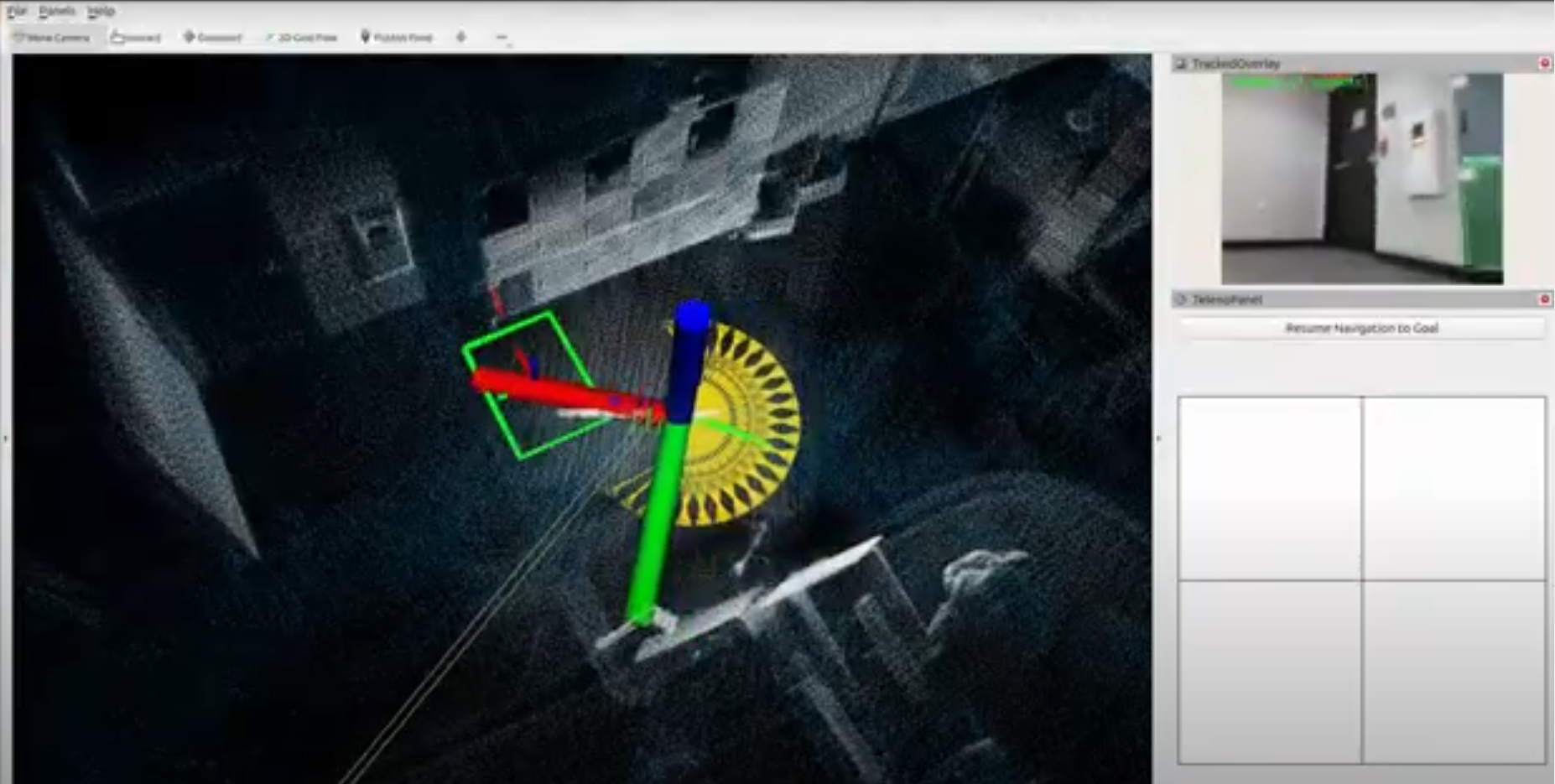
Fig: Robot Navigating to a Shelf
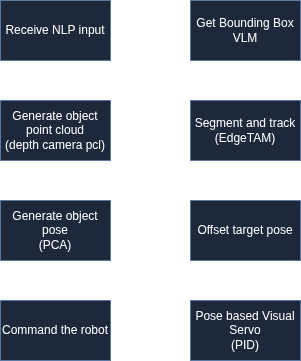
Fig: Visual servo base pipeline.