
Problem Description
The Challenge: Expensive and Inefficient Infrastructure The current public safety infrastructure is facing a nationwide crisis characterized by high costs, deep inefficiencies, and poor results.
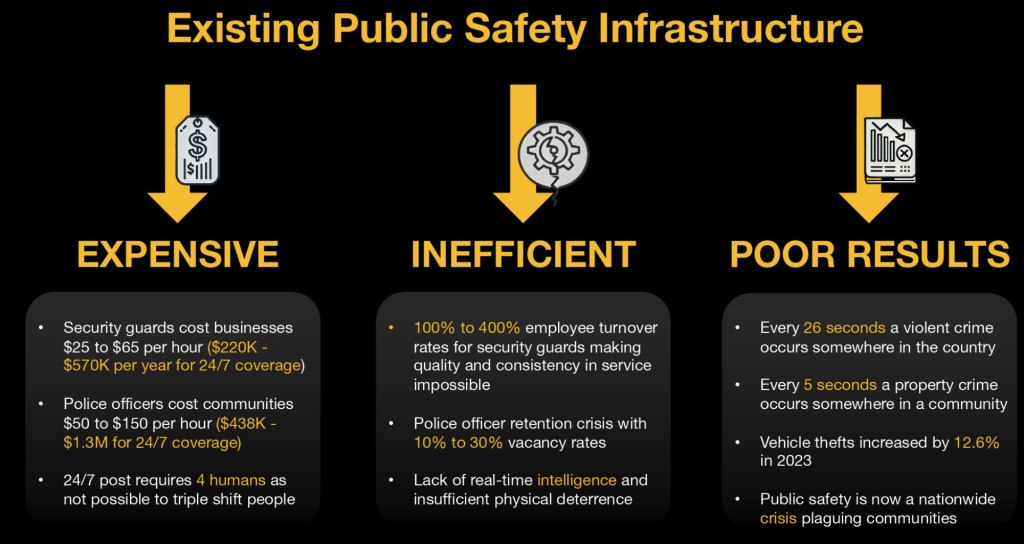
- Unsustainable Costs: Maintaining a 24/7 security post requires 4 human shifts. This costs businesses $220K to $570K per year for security guards ($25-$65/hour) and up to $1.3M per year for police officers ($50-$150/hour).
- Severe Inefficiencies: The industry struggles with a lack of real-time intelligence and physical deterrence. This is worsened by extreme staffing issues, including a 100% to 400% turnover rate for security guards and a 10% to 30% vacancy rate for police officers.
- Rising Crime Rates: As a result of these gaps, a violent crime occurs every 26 seconds, a property crime occurs every 5 seconds, and vehicle thefts increased by 12.6% in 2023.
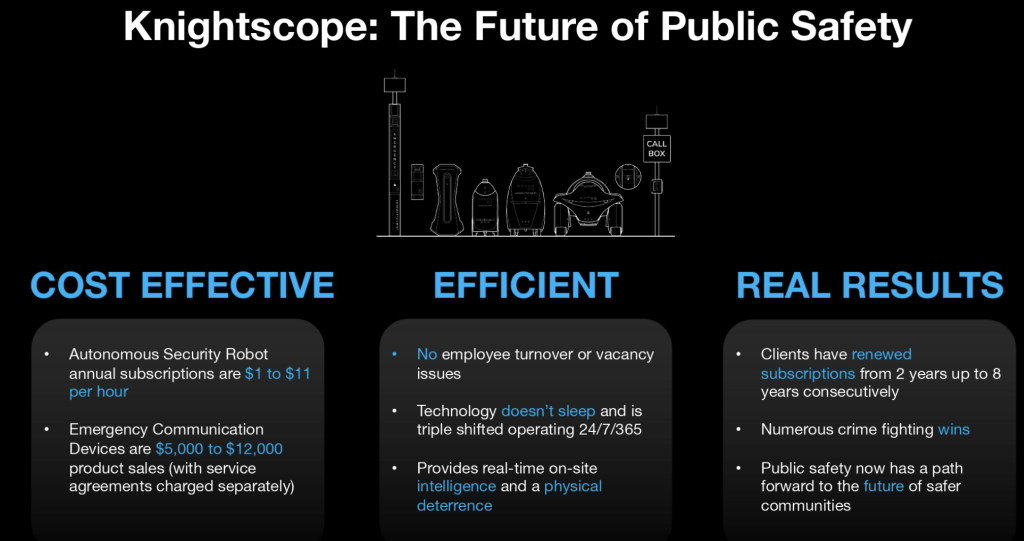
The Solution: Autonomous Security Robots (ASRs) To combat these issues, Knightscope introduces the future of public safety: Autonomous Security Robots. Compared to traditional methods, our patrol robots provide a vastly superior, modern alternative:
- Highly Cost-Effective: Instead of spending up to $150 per hour to hire an officer, an annual ASR subscription costs only $1 to $11 per hour.
- Always Active: Technology doesn’t sleep. These robots provide continuous 24/7/365 operation, entirely eliminating employee turnover and vacancy issues.
- Real-Time Deterrence: The robots deliver real-time on-site intelligence and strong physical deterrence to actively prevent crime.
Use Cases
Imagine a security officer arriving for their morning shift to monitor a large computing power center. Rather than physically walking the perimeter, the officer commands a fleet of advanced autonomous robots from a single control center.
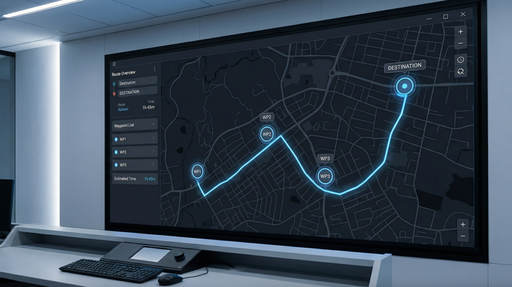
Morning Setup & Intelligent Deployment The officer begins by opening the patrol dashboard. The system provides color-coded suggested waypoints generated by an AI model based on historical data. The officer can either select these suggested waypoints or drag and drop new waypoints at key locations across the facility. After a short delay, the system generates a collision-free loop path that covers all selected waypoints. The robot then begins patrolling autonomously along the path.
Live Patrol & Centralized Management As the K7 navigates the facility, the officer monitors the UI, which displays the current path along with the robot’s status. The system does not simply follow a predefined path, it continuously learns from its environment. Every minute, it perceives its surroundings, avoids obstacles along the path, and detects anomalies. The system also ingests data from other devices in the network, such as stationary K1 towers, K5 robots, and other K7 units.
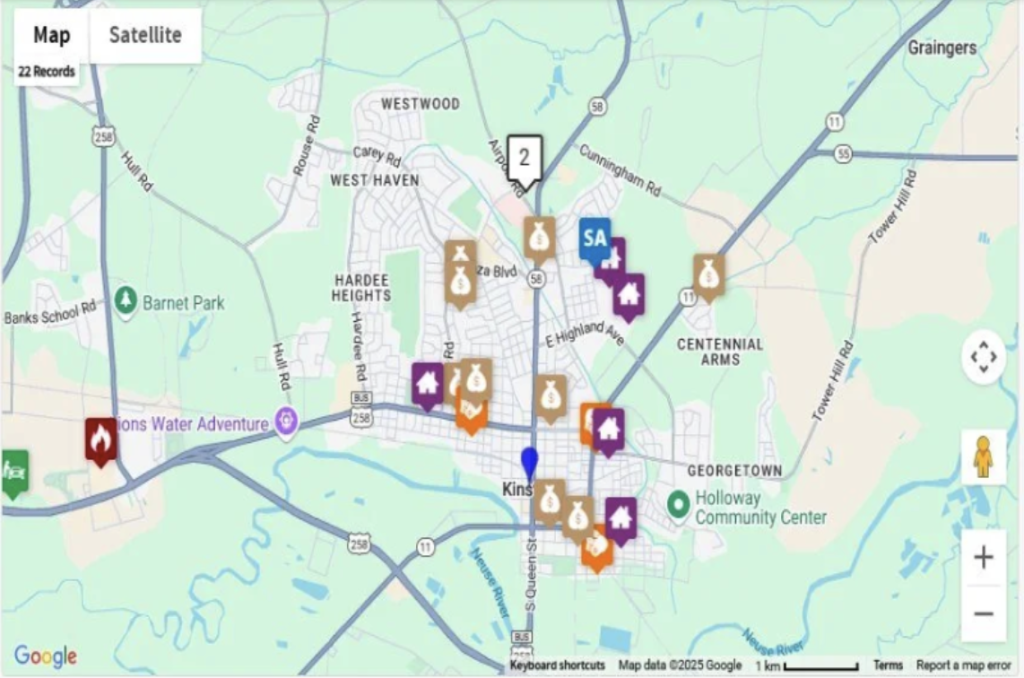
Emergency Response & Rapid Resolution Suddenly, the system detects an anomaly, such as fighting, in Zone C. It immediately redirects a K7 robot to the affected area. As the K7 approaches the hotspot, the interface automatically switches to a live camera stream, providing the officer with real-time visual verification.
From here, the officer makes a critical decision:
- Confirm:If the fighting is verified, the officer notifies the police and the operations center. The K7 is commanded to maintain a safe standoff distance while continuing to stream live video and provide situational awareness for first responders.
- Dismiss: If it is a false alarm (e.g., people playing frisbee), the officer dismisses the alert. The system then redirects the K7 back to its original patrol route.